

126 محصول

7 محصول

81 محصول

36 محصول

10 محصول

123 محصول

331 محصول

21 محصول

56 محصول


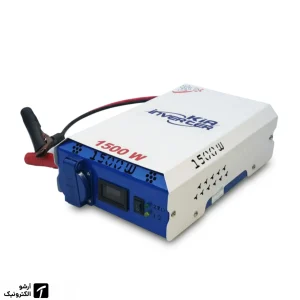

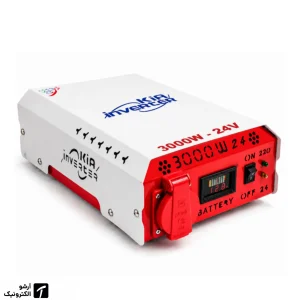
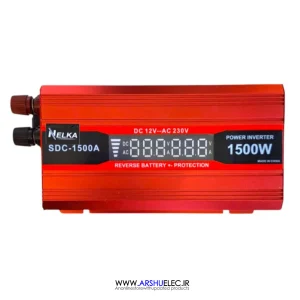
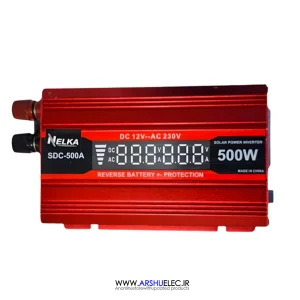
Inverters
In today’s world, with the rapid advancement of technology and the growing demand for intelligent and automated systems, devices such as inverters play a vital role in energy conversion and management. Inverters are electronic devices that convert direct current (DC) into alternating current (AC). Their applications range from residential homes to advanced industrial systems.
What is an Inverter?
An inverter is an electronic device used to convert DC power into AC power. In many systems, the primary energy source is DC, such as batteries or solar panels. However, most electrical appliances operate on AC power. This is where the role of the inverter becomes essential.
The inverter functions by using components like power transistors, MOSFETs, or IGBTs to generate pulses at a specific frequency. These pulses are then passed through filters to create a waveform that closely resembles a sine wave.
Types of Inverters
1. Square Wave Inverter
This type of inverter produces a square wave output. It is the simplest and cheapest form of inverter but is not suitable for sensitive devices because the square wave can damage equipment.
2. Modified Sine Wave Inverter
This is an improved version of the square wave inverter, and its output waveform more closely resembles a sine wave. It is suitable for most household appliances and is relatively affordable.
3. Pure Sine Wave Inverter
This is the best and most expensive type of inverter. Its output waveform is identical to the utility grid power and is suitable for all electrical devices, especially sensitive ones like medical equipment and audio-visual systems.
Applications of Inverters
1. Solar Power Systems
In solar energy systems, panels generate DC power. To use this energy for household appliances or to feed it into the grid, an inverter is required to convert DC to AC.
2. Uninterruptible Power Supplies (UPS)
Inverters are essential components of UPS systems. When the power goes out, the battery supplies DC power, and the inverter converts it into AC power for the equipment.
3. Electric Motor Control
In the industry, inverters are used to control the speed, direction, and torque of AC motors. This application is particularly common in HVAC systems, elevators, and industrial production lines.
4. Electric and Hybrid Vehicles
In electric vehicles, inverters convert the DC power from the battery into AC power for the electric motors.
Advantages and Disadvantages of Inverters
Advantages:
High efficiency
Ability to control output voltage and frequency
Energy saving through intelligent control
Increased equipment lifespan due to high-quality power output
Disadvantages:
High initial cost (especially pure sine wave types)
Requires regular maintenance
Sensitive to environmental conditions like heat or humidity
Conclusion
Inverters are essential devices in the modern world that enable the broad use of diverse energy sources by converting DC to AC. With the ongoing technological development, the importance of inverters in homes, industries, transportation, and renewable energy systems is growing rapidly. A thorough understanding of the types of inverters and their specific applications helps users make smarter choices based on their needs.
یکی از راه های زیر را برای ارتباط انتخاب کنید